Falling for glass walls, warm wood, and clean lines is easy. Knowing which New Canaan modern homes are timeless, practical, and worth your offer takes a sharper eye. If you love design, this guide helps you read the architecture, spot red flags early, and plan your next steps with confidence. You will learn the local styles, what to check on tour, the rules that can affect renovations, and where to deepen your research. Let’s dive in.
Why New Canaan is a modern icon
New Canaan became a national center for modern residential design after World War II when architects later called the Harvard Five settled here and began building experimental homes. Philip Johnson’s 1949 Glass House drew national attention and helped define the town’s modern legacy. You can explore the history and materials in the Modern Homes Survey from The Glass House.
By the 1970s, surveys showed more than 90 to 100 architect‑designed midcentury houses in town. The New Canaan Museum & Historical Society documents these homes and hosts tours and programs that keep the story alive for new generations of buyers. Learn more about events and preservation efforts through the museum’s overview of Modern New Canaan.
Modern styles you will see
Midcentury Modern
You will recognize low or gently pitched roofs, post‑and‑beam structures with long open spans, and large glass walls that bring the landscape inside. Materials are simple and honest, such as wood, brick, exposed concrete, steel, and glass. Many local examples appear in The Glass House’s Modern Homes Survey.
International and glass houses
These homes push transparency further, framing views with expansive glazing and prioritizing sightlines over traditional room‑by‑room privacy. The Glass House is the most famous local example and a helpful reference for proportion and detailing.
Ranch and split‑level variants
Postwar ranches and split‑levels keep a low, horizontal profile with picture windows and open living areas. They often accept system upgrades more easily than highly bespoke architect houses, which can make them appealing if you plan energy or HVAC improvements. The museum’s Modern New Canaan materials place these homes within the broader local mix.
Contemporary neo‑modern new builds
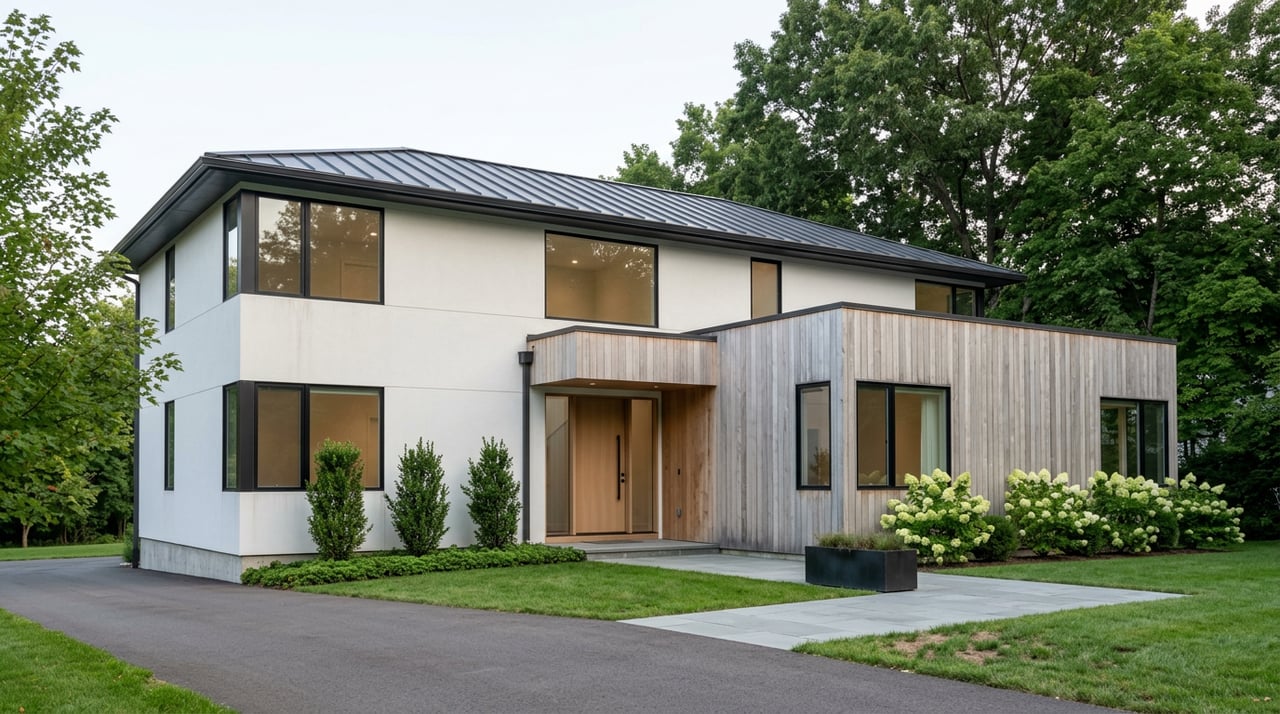
In recent decades, some new homes apply midcentury principles like open plans, natural materials, and strong daylighting but with current systems and larger footprints. You will also see larger replacements where teardowns occurred. Design‑led projects stand out from more generic builds, and you can preview the conversation around contemporary infill in resources like this Architectural Record feature on recent work in the region (Architectural Record article).
Traditional neighbors
Colonials, Shingle, and farmhouse styles remain common across Fairfield County. Many buyers are drawn to New Canaan because you can choose between historic character and modernist clarity, often on leafy lots with privacy.
On‑tour buyer checklist
Bring this list to each showing so you can move quickly and still protect your upside.
Layout and plan
Look at how kitchen, living, and dining spaces flow and whether bedrooms and work areas are private enough for your lifestyle. Many midcentury homes favor one‑level living with long sightlines, which feels airy but can challenge privacy. Confirm that circulation and storage work for you today, not just aesthetically.
Natural light and orientation
South and west glass can feel amazing in winter and late afternoons but may overheat in summer. Ask how the home manages daylight and heat gain and whether glazing has been upgraded. For a quick primer on solar orientation and window performance basics, preview the Department of Energy’s window guidance summarized in this energy saver overview.
Glazing and window condition
Single‑pane glass or failed insulated units are common in older modern homes. Look for condensation between panes, staining at seals, warped frames, and stuck operable windows. Large custom panes are costly to replace, so verify what has been upgraded and whether replacements are available for custom sizes. Use The Glass House survey to familiarize yourself with typical assemblies.
Structure and materials
Post‑and‑beam frameworks should read straight and true. Watch for notches, steel plates, or patched areas that suggest prior modifications. Original finishes like mahogany paneling, terrazzo, exposed brick, or board‑and‑batten siding are part of the value, though conservation may be needed.
Roofs and drainage
Flat and low‑slope roofs suit the architecture but demand care. Scan for ponding, cracked membranes, patched seams, failed flashings, and blocked drains or scuppers. A flat‑roof specialist can inspect and may offer a certification; preview what pros look for in this flat‑roof inspection checklist.
Mechanical systems and energy
Many midcentury homes predate modern insulation and HVAC standards. Ask about roofline or attic insulation, ductwork condition, and the age and type of heating and cooling. Mini‑split heat pumps are a common retrofit for glass‑rich homes, but placement and electrical capacity matter. The energy saver overview above outlines basics you can apply as you tour.
Health and hazardous materials
If the home was built before 1978, assume possible lead‑based paint and confirm that required federal lead disclosures are provided, including your option for a 10‑day inspection. Learn where lead may be found from the EPA’s lead guidance. Older homes may also contain asbestos in insulation, floor tiles, roofing, or sprayed finishes. The EPA recommends leaving intact materials undisturbed and using qualified abatement contractors if you renovate; see this indoor air quality guide.
Quick‑reference checklist
- Does the plan balance open living with private bedroom or work spaces? (layout)
- Are major glass walls single‑pane or insulated? Any evidence of seal failure? (glazing)
- Is the roof flat or low slope? Any signs of ponding, blistering, or repeated patching? (roof)
- Are beams straight with no obvious notches or repairs? Has a structural engineer reviewed load paths? (structure)
- What is the age and type of heating and cooling, and are electrical and insulation levels adequate? (systems)
- Was the house built before 1978, and have you requested test or inspection reports for lead or asbestos? (hazards)
For architecturally significant homes, consider a home inspector who regularly evaluates midcentury and post‑and‑beam properties. The National Trust outlines why specialized inspectors matter in this short inspection tips guide.
Costs and tradeoffs to weigh
- Glazing: Large custom panes and frames often require specialty fabrication, which raises costs compared with standard window replacements. This can affect both your budget and negotiation strategy.
- Flat roofs: Membrane replacements are labor‑intensive and frequently surface during negotiations on modern homes. A roofer’s inspection and, if offered, a roof certification can clarify risk and value. See the flat‑roof checklist for context.
- Structure: Beams with notches or visible repairs should trigger a structural review. The outcome informs whether you request credits or plan phased work after closing.
- Hazard remediation: Testing and abatement for lead or asbestos can be significant. Federal rules on lead disclosure and renovation apply to pre‑1978 homes; see the EPA’s lead guidance for responsibilities.
The reward for navigating these items is clear. Authentic midcentury design holds enduring appeal, yet the buyer pool can be more selective. Thoughtful due diligence lets you secure a distinctive home while understanding the true cost of ownership.
Rules, permits, and preservation
If your target home sits within New Canaan’s Local Historic District, exterior changes require a Certificate of Appropriateness from the Historic District Commission. Review the commission’s process in the approved regulations. The Planning and Zoning Commission is also reviewing zoning regulations, so confirm current rules and application steps before you plan alterations to an architect‑designed house.
Local institutions protect homeowner privacy, and some surveys list architects and houses without street addresses. Treat the New Canaan Museum & Historical Society as a research partner rather than a source of publishable addresses while you learn the market.
Market snapshot
New Canaan is a premium market within Fairfield County. As a recent reference point, Redfin reported a median sale price of approximately $1,507,384 in February 2026. Zillow’s ZHVI showed an average home value around $2,026,801 as of January 31, 2026. Methodologies differ and numbers change month to month. Before you set a budget or make an offer, align with current local MLS data for your target segment.
Learn before you buy
- Visit the Glass House and study documented examples through The Modern Homes Survey.
- Attend Modern House Day and October4Design programs to see homes up close and meet local experts. Watch the October4Design schedule and the museum’s page on Modern New Canaan.
- Ask listing agents for system histories, permits, and service records for roofs, glazing, and mechanicals.
- Schedule specialized inspections early, including structural, glazing, flat‑roof, and environmental reviews where warranted.
- If a property may be within a historic district, call the Town and review HDC regulations to understand what requires approval.
Ready to find the right modern home in New Canaan with clear advice and disciplined negotiation? Partner with a local advocate who knows the architecture and the process. Connect with John Bainton to tour intelligently, line up the right specialists, and move forward with confidence.
FAQs
What defines a New Canaan midcentury modern home?
- Look for post‑and‑beam construction, low or gently pitched roofs, large glass walls that blend indoors and outdoors, and a simple palette of wood, brick, concrete, steel, and glass, as documented by The Glass House survey.
How can I manage heat gain in glass‑rich homes?
- Ask about glazing type and shading; south and west exposures may need upgraded insulated glass and shading solutions, and the DOE’s energy saver overview explains why orientation matters.
Are flat roofs a deal breaker on modern homes?
- Not necessarily, but they demand regular maintenance; have a flat‑roof specialist inspect for ponding, failed flashing, and membrane issues, and consider a roof certification using this inspection checklist as a guide.
What permits apply in New Canaan’s historic district?
- Exterior changes within the Local Historic District require a Certificate of Appropriateness from the Historic District Commission; review the HDC’s approved regulations and confirm current procedures with the Town.
How do I verify if a house is architect‑designed?
- Start with local surveys and museum resources, such as Modern New Canaan and The Glass House survey, then cross‑check permits and records with the Town or listing documentation.
When should I test for lead or asbestos?
- For pre‑1978 homes, federal law presumes possible lead‑based paint and requires disclosure; consult the EPA’s lead guidance, and for asbestos concerns, follow the EPA’s indoor air quality guide and hire qualified contractors if abatement is needed.