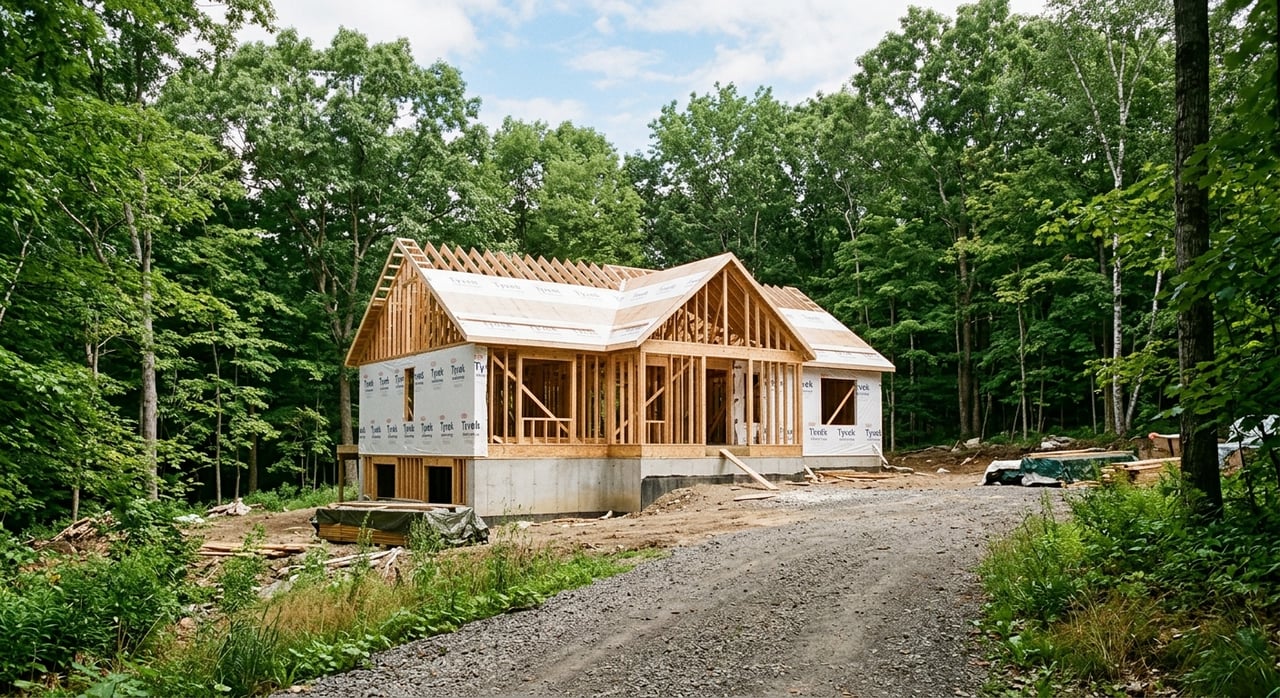
Thinking about buying new construction or land in Wilton? It can be an exciting way to get the home you really want, but it also comes with more moving parts than a typical resale purchase. If you understand how Wilton handles zoning, subdivision, utilities, wetlands, and financing, you can make smarter decisions and avoid expensive surprises. Let’s dive in.
Start With the Right Path
When you buy in Wilton, “new construction” can mean a few very different things. The right path for you depends on your timeline, budget, and how much complexity you are willing to manage.
The three most common options are a builder spec home, raw land for a custom build, or a teardown-and-rebuild project. Each one has its own due diligence steps, financing structure, and approval timeline.
Builder Spec Homes
A spec home is often the most straightforward option. If the home is already completed, or close to it, the financing process may feel more like a standard home purchase.
If construction is still underway, your loan may be structured as construction-to-permanent financing instead of a typical resale mortgage. That is why it helps to ask early whether the lender uses a single-closing or two-closing structure and how builder draws are handled.
Raw Land for a Custom Build
Buying land gives you the most flexibility, but it also requires the most upfront research. In Wilton, buildability is very much a parcel-by-parcel question.
Before you move forward, you need to confirm zoning, subdivision status, wetlands impacts, floodplain limits, and whether septic, well, sewer, or public water service are actually available for that specific parcel. You should never assume utility availability just because nearby homes have it.
Teardown and Rebuild
A teardown can be a smart option if you want a better location with the chance to create a newer home. But in Wilton, this path can bring extra review steps before demolition or rebuilding begins.
The town’s demolition-delay ordinance allows review of structures over 500 square feet that are more than 50 years old, and that delay can run up to 90 days. If the property is within a historic district or is a designated historic property, a Certificate of Appropriateness may also be required before a structure is erected, altered, restored, or moved.
Understand Wilton Zoning Basics
For residential land, zoning is one of the first filters in deciding whether a parcel works for your plans. Wilton’s posted zoning table includes districts such as R-1A and R-2A, each with its own minimum lot size and yard requirements.
In R-1A, the minimum lot size is 1 acre, with 40-foot front yards, 30-foot side yards, and 40-foot rear yards. In R-2A, the minimum lot size is 2 acres, with 50-foot front yards, 40-foot side yards, and 50-foot rear yards.
That said, minimum acreage alone does not guarantee that a lot is buildable. Wilton also requires that 80% of the required lot area be outside water, the 100-year floodplain, and inland wetlands.
The town also imposes additional contiguous buildable-area requirements in the R-1A and R-2A districts. So even if a parcel looks large enough on paper, its usable building area may be more limited once environmental constraints are applied.
Rear Lots Have Extra Rules
Rear lots are allowed in Wilton, but they must still meet district standards. They also need a 25-foot accessway, and that accessway must be 500 feet or less.
If you are considering a rear lot, this is a good example of why survey review matters early. Access, setbacks, and buildable area all need to work together, not separately.
Subdivision Approval Matters More Than Many Buyers Expect
If a parcel needs to be split, reconfigured, or formally recognized as a new lot, Wilton requires subdivision control. No subdivision or resubdivision may happen until the Planning and Zoning Commission approves it, the record subdivision map is endorsed, and the map is filed with the Town Clerk.
This can be a major issue for buyers who are looking at raw land, a rear lot, or a larger property that seems like it could support a new home site. A lot that looks promising in a listing may still need approvals before it can be treated as a legal building lot.
Wilton’s subdivision regulations note that an optional preapplication plan can help save undue time and expense. For buyers, that can be especially useful when you are trying to evaluate risk before committing to a property.
Utilities and Health Review Are Parcel Specific
In Wilton, utility questions should be answered with records, not assumptions. The town’s Water Commission says Wilton does not currently own any water systems, so public water availability needs to be verified parcel by parcel.
The Water Pollution Control Authority oversees sewers and pump stations, which means sewer access also needs to be confirmed for the specific property you are considering. A nearby street connection does not automatically mean service is available to your lot.
If septic or a private well will be involved, the Health Department becomes an important resource. It enforces state rules for septic systems and wells, provides septic and well permit information, and points buyers to approved drinking-water labs.
Wetlands and Floodplain Can Change the Deal
Wetlands and watercourse issues can have a direct impact on where and whether you can build. In Wilton, the Inland Wetlands Commission reviews regulated activities within wetlands and watercourses and in adjacent regulated areas.
If an activity is likely to impact or affect a wetland or watercourse, a municipal wetland permit is required before that work begins. This is one reason raw land and teardown projects often need a civil engineer involved very early.
Floodplain constraints matter too. Wilton’s zoning regulations require that much of the required lot area remain outside the 100-year floodplain, which can reduce the practical building envelope on some parcels.
Build Your Due Diligence Team Early
For land or teardown purchases, the right professionals can save you time, money, and stress. In Wilton, a practical team often includes your buyer’s agent, lender, real estate attorney, surveyor, civil engineer, builder, and, where septic is involved, a health-department or sanitation contact.
That team matters because approvals can come from several different places. Depending on the property, you may be dealing with zoning or subdivision review, wetlands review, health department approval, building permits, demolition review, and possible historic review.
Records to Review Before Closing
Some of the most useful early records include:
- Survey
- Assessor field card
- GIS maps
- Septic and well history
- Wetlands records
- Historic district or historic property records
- Building permit history
Wilton makes Assessor field cards and GIS maps available online, and the Building Department keeps permit records in the online portal. If you are unsure whether a permit is required for planned work, the town’s guidance is to assume it is required unless the Building Department says otherwise.
Why Engineers and Surveyors Matter
A surveyor is often essential because subdivision maps must show property lines, nearby structures, and watercourses. For raw land or teardown parcels, a survey-driven review can help identify problems before you close.
A civil engineer is also commonly part of the first wave of due diligence. Wilton’s subdivision rules reference a Connecticut-licensed Professional Engineer and require grading, sediment, and erosion-control documentation prepared to technical standards.
Financing for New Construction or Land
Financing is one of the biggest differences between buying a finished home and buying land or a home in progress. The earlier you speak with lenders, the clearer your options and limits will be.
The CFPB says a lender must provide a Loan Estimate within three business days after receiving six key pieces of information. You also do not need a signed home purchase agreement to receive a Loan Estimate, which makes early comparison shopping easier.
Construction Loans
If you are building a home, ask whether the lender offers a single-closing or two-closing construction-to-permanent loan. Also ask how the construction phase and permanent phase will be disclosed and how builder draws are managed.
These details can affect closing costs, timing, and cash flow during the build. Even when the property itself is appealing, the financing structure still needs to fit your comfort level and budget.
Land Loans
Land-only financing is usually more specialized than a traditional home mortgage. In practice, buyers often need more documentation, more proof of buildability, and a larger cash contribution than they would for a completed home.
Properties with more than 10 acres or difficult appraisals may fall into niche loan programs. For that reason, a parcel that looks like a great opportunity may still require a very different financing strategy than a standard residential purchase.
Expect a Longer Timeline
Custom builds and teardowns usually take longer than buying a completed spec home. That is because the approvals can stack one after another rather than all happening at once.
If a property needs zoning clarification, subdivision approval, wetlands review, septic or well approval, demolition review, or historic sign-off, each step can affect the next one. In some cases, a lender may wait until the project is more clearly financeable before moving forward.
A realistic timeline helps you make better decisions about rate locks, temporary housing, and overall budget. It also keeps expectations grounded when a parcel looks simple at first glance but turns out to need multiple layers of review.
A Smarter Way to Evaluate a Wilton Opportunity
If you are choosing between land, a spec home, or a teardown, the best move is usually to start with the parcel itself and work outward. Ask what is legally allowed, what is physically possible, what utilities are confirmed, and what approvals may still be needed.
That kind of disciplined review can protect you from overpaying for a property that has hidden constraints. It can also help you move faster and with more confidence when a truly solid opportunity comes to market.
In Wilton, buying new construction or land is not just about the house you want to build. It is about understanding the process well enough to know whether the property can support that vision in the first place.
If you are weighing a spec home, raw land purchase, or teardown in Wilton, working with an agent who understands the local review process can make the path much clearer. Reach out to John Bainton for practical, data-driven guidance as you evaluate your next move.
FAQs
What should you check before buying land in Wilton CT?
- You should confirm zoning, subdivision status, wetlands impacts, floodplain constraints, septic or well records, and whether sewer or public water service is actually available for that parcel.
How does zoning affect buying land in Wilton CT?
- Zoning affects minimum lot size, yard setbacks, buildable area, and whether environmental constraints such as wetlands or floodplain reduce the usable portion of the lot.
Do rear lots in Wilton CT have special rules?
- Yes. Rear lots must meet district standards, include a 25-foot accessway, and keep that accessway to 500 feet or less.
Do you need subdivision approval to create a new lot in Wilton CT?
- Yes. Wilton requires Planning and Zoning Commission approval, endorsement of the record subdivision map, and filing with the Town Clerk before a subdivision or resubdivision can occur.
What financing is common for new construction in Wilton CT?
- Depending on the project, buyers may use construction-only financing or construction-to-permanent financing, which may be structured as either a single-closing or two-closing loan.
Can demolition rules affect a teardown in Wilton CT?
- Yes. Structures over 500 square feet and more than 50 years old may be subject to demolition-delay review, and properties in historic districts or designated historic properties may require additional historic approval.