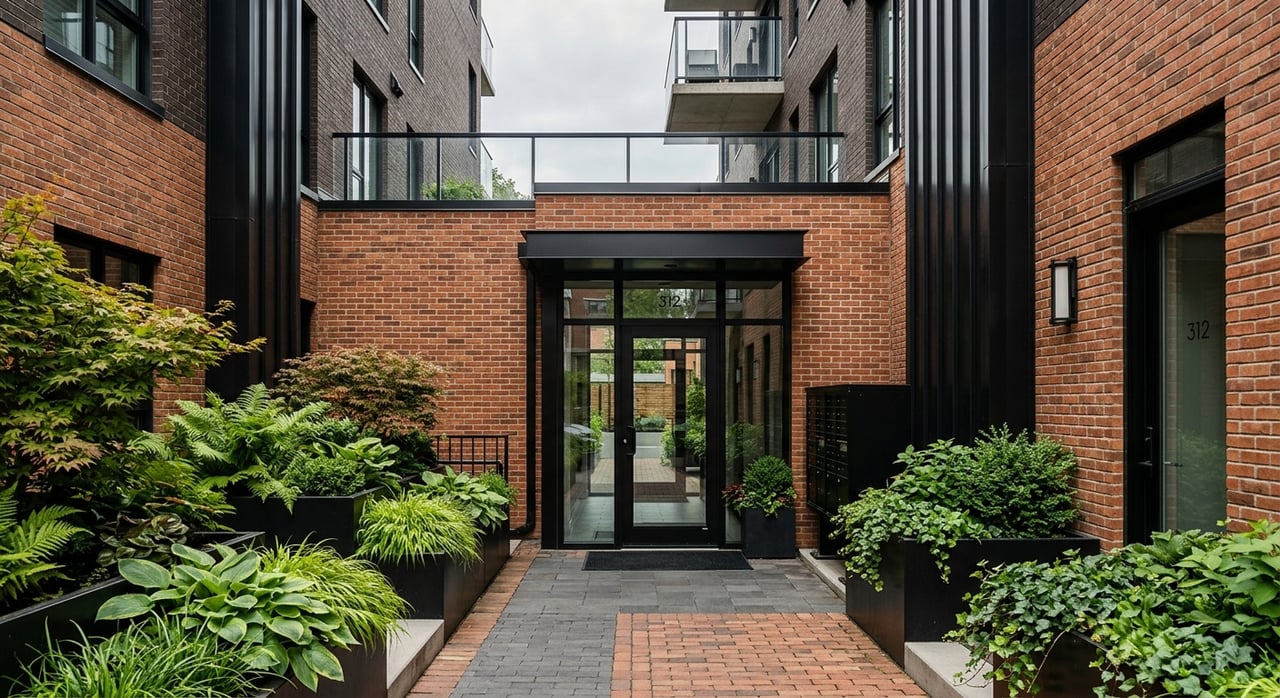
If you are deciding between downtown and suburban Stamford, you are really deciding how you want your everyday life to feel. Do you want to walk to errands and catch the train with ease, or would you rather have more space, a larger lot, and a quieter residential setting? The good news is that Stamford offers both, and each option can make sense depending on your goals, budget, and routine. Let’s dive in.
Stamford Offers Two Distinct Lifestyles
Stamford’s housing map is not random. The city’s 2035 Comprehensive Plan shows a clear split between its dense mixed-use core and its lower-density residential areas. In fact, about 60% of Stamford’s land is in the Residential Single-Family future land-use category, and the plan does not recommend changing single-family zones.
That helps explain why downtown and suburban Stamford feel so different. Downtown centers around the Transportation Center and has a much more apartment- and condo-oriented housing pattern. Areas farther north and in lower-density parts of the city are more closely tied to detached homes, larger lots, and a more traditional residential layout.
Downtown Stamford at a Glance
Downtown Stamford is the city’s most walkable and transit-connected area. If you want daily convenience, a smaller home footprint, and easy access to shops, dining, and rail service, this part of Stamford often stands out first.
The housing mix downtown is also important. Current inventory trends show a condo-heavy market, with examples ranging from roughly the low $300,000s to the $800,000s and above. By comparison, a downtown single-family home search returned a relatively small number of nearby homes, which points to a market that is better suited to buyers looking for attached living and lower-maintenance ownership.
Why Buyers Choose Downtown
Downtown tends to work well if your top priorities are convenience and mobility. Stamford Downtown’s 2024 report gives the district a Walk Score of 88, and the city says downtown households average 1.01 vehicles, with 23% having no vehicle at all.
That data supports what many buyers already suspect after one visit: downtown is built for getting around with less dependence on a car. Most errands can be done on foot, and the area is organized around a denser, more active daily rhythm.
Transit Is a Major Advantage
For commuters, downtown has Stamford’s strongest transit access. Stamford Transportation Center serves the Metro-North New Haven Line, Shore Line East, Amtrak, and Greyhound. Stamford Downtown’s report lists travel time to Grand Central at about 47 minutes.
The area also benefits from local bus connections. CTtransit Route 351 links the station and the central business district during rush hours and is timed to meet certain trains, and the I-Bus Express connects downtown Stamford and White Plains.
The Downtown Lifestyle
Downtown’s edge is not just transportation. It is also the mix of activity and convenience packed into one area. The city describes Bedford Street as Stamford’s main downtown restaurant, bar, and retail corridor, and Stamford Downtown’s report says the district attracts more than 350,000 annual visitors through 18 signature events.
If you like being near restaurants, public events, and a more active street scene, downtown can feel energizing. You can still find parks nearby too, including Columbus Park, Commons Park, Kiwanis Park, and Latham Park.
Suburban Stamford at a Glance
Suburban Stamford offers a different kind of value. If your wish list includes a detached home, more outdoor space, and a lower-density setting, this side of the market may feel like a better fit.
The city’s long-range planning reinforces that pattern. Low-density single-family areas are found primarily along the waterfront and north of Bulls Head, and older planning language describes North Stamford as a largely single-family, wooded-lot area with a focus on preserving natural scenery.
Why Buyers Choose Suburban Areas
Many buyers choose suburban Stamford because they want more room inside and outside the home. In practical terms, that often means a detached house, a larger lot, more storage, and a more residential street pattern.
This is especially true in places like North Stamford, where the setting is more spread out and closely tied to wooded land and open space. If privacy and breathing room matter more to you than walking to dinner, suburban areas may feel like the stronger match.
Green Space and Scenery
Stamford has more than 56 parks, and the city’s goal is for every resident to be within a 10-minute walk of a quality park. That citywide access matters, but suburban Stamford often gives you easier access to larger natural settings and a more spacious feel.
North Stamford in particular is known for that advantage. Dorothy Heroy Park offers wooded areas and hiking trails, Chestnut Hill Park includes open space, and the Stamford Museum & Nature Center reports more than 80 acres of hardwood forest and hiking trails.
Expect More Driving
The trade-off is simple: more space usually means more driving. Suburban neighborhoods are connected, but they generally build car travel into your routine more than downtown does.
That said, there are still useful transit options outside downtown. The city manages commuter parking lots at Glenbrook and Springdale stations, CTtransit Route 344 connects the Transportation Center, Glenbrook, Norton Heights, and Darien stations, and Route 349 serves Cove Island Park, Glenbrook, and Springdale.
Price Differences Are More Nuanced
One of the biggest mistakes buyers make is assuming downtown is always the budget option and suburban Stamford is always the premium option. The data shows the picture is more layered than that.
Zillow places Stamford’s typical home value at about $722,451. In neighborhood snapshots, Downtown is in the mid $300,000s, Glenbrook and West Side are around the high $400,000s, Cove-East Side is around the high $500,000s, Springdale is around the mid $600,000s, Turn of River is around the mid $800,000s, and North Stamford and Westover are above $1.1 million and $1.3 million respectively.
What That Means for Buyers
The key takeaway is that location alone does not tell the whole price story. Some close-in neighborhoods may feel more accessible than buyers expect, while parts of suburban Stamford, especially North Stamford and Westover, sit at the top end of the city’s price spectrum.
That is why it helps to compare areas based on both lifestyle and housing type. A downtown condo and a suburban single-family home are often solving very different needs, so the best value depends on what you are actually trying to buy.
Glenbrook and Springdale Offer a Middle Ground
If you are torn between downtown energy and suburban space, Glenbrook and Springdale may be worth a closer look. These areas can offer a more balanced setup for buyers who want less density than downtown without giving up rail and bus access.
They also have practical commuter support. The city manages parking at both Glenbrook and Springdale train stations, which can make these neighborhoods appealing if you expect to drive to the station rather than walk everywhere.
A Simple Decision Framework
If you are still unsure, this side-by-side lens can help clarify your choice.
| Priority | Better Fit |
|---|---|
| Walkability for daily errands | Downtown Stamford |
| Easy rail access and transit use | Downtown Stamford |
| Condo or attached-home living | Downtown Stamford |
| Detached home and larger lot | Suburban Stamford |
| More privacy and lower density | Suburban Stamford |
| Mix of neighborhood feel and transit access | Glenbrook or Springdale |
How to Choose the Right Stamford Fit
Start with your routine, not just your budget. Think about how often you want to drive, whether train access is part of your weekly schedule, and how much home and outdoor space you truly need.
Then consider the housing type that matches your life stage. If you want lower maintenance and a smaller footprint, downtown may be the more practical choice. If you are looking for a detached home and a more house-focused setting, suburban Stamford will likely offer a better fit.
Finally, look at neighborhoods through both a lifestyle lens and a numbers lens. Stamford gives you real variety, and the smartest choice usually comes from matching your day-to-day habits with the part of the city designed for them.
If you want help comparing Stamford neighborhoods in a practical, data-driven way, John Bainton can help you weigh commute patterns, housing types, and price points so you can move with confidence.
FAQs
Is downtown Stamford more walkable than suburban Stamford?
- Yes. Downtown Stamford is the city’s most walkable core, with a Walk Score of 88 and most errands possible on foot.
Are downtown Stamford homes mostly condos or houses?
- Downtown Stamford is much more condo- and apartment-oriented, with relatively limited single-family inventory near the core.
Is suburban Stamford always more expensive than downtown?
- No. Prices vary by neighborhood, and some suburban areas, including North Stamford and Westover, are among the city’s highest-priced markets.
Which Stamford neighborhoods offer a middle ground between urban and suburban living?
- Glenbrook and Springdale can offer a middle ground, with a less urban feel than downtown while still providing rail, bus, and commuter parking access.
What makes North Stamford different from downtown Stamford?
- North Stamford is more closely associated with single-family homes, wooded lots, open space, and a lower-density residential setting, while downtown is denser, more walkable, and more transit-focused.