If you are comparing Darien neighborhoods, you are not really choosing between dozens of totally different areas. You are usually deciding how you want to balance commute convenience, shoreline access, and lot size. That can feel simple at first, but the right fit becomes much clearer when you match each area to how you actually want to live day to day. In this guide, you will get a practical way to think about Darien’s neighborhood options so you can focus your search with confidence. Let’s dive in.
What Shapes Darien Neighborhood Choice
Darien is a relatively compact town, so neighborhood differences are often less about long driving distances and more about lifestyle priorities. The biggest factors for many buyers are train access, proximity to the shoreline, and whether you want a more town-centered setting or a more land-focused single-family feel.
The town has two Metro-North stations, municipal parking downtown with free short-term shopper parking, roughly 30 acres of shoreline beaches, and 11 parks plus 203 acres of ballfields and parkland. Those features create distinct pockets within town, even though Darien itself is not large geographically.
Darien Neighborhoods at a Glance
Here is the simplest buyer shorthand for Darien:
- For the easiest commute and errands: Darien Station area or Noroton Heights
- For a transit-and-retail mix: Noroton Heights
- For a strong coastal identity: Tokeneke or Long Neck Point
- For waterfront buyers who want to study flood and lot details closely: Noroton Bay
- For more land and a traditional detached-home setting: Inland residential streets tied to larger-lot zoning areas
That shorthand is helpful, but it is only a starting point. Each part of town offers a different everyday rhythm.
Commute-First Areas
Darien Station Area
If your routine centers on the train, downtown access, and quick errands, the Darien Station area is one of the most practical places to start. Darien Train Station is the town’s main rail hub for travel to New York City and western Connecticut, and the town also provides commuter parking around the station.
This part of town also benefits from several downtown municipal lots with free short-term parking for shoppers. Tilley Pond Park is nearby as well, which adds a convenient green space close to the town center. For many buyers, this area works best when ease and efficiency matter more than having a larger lot or a tucked-away shoreline setting.
Noroton Heights
Noroton Heights is Darien’s other major train-centered area, and it has a different feel from the downtown core. The town describes it as a pedestrian-friendly, transit-oriented area near mass transit and I-95, with a business zone intended to preserve retail while encouraging offices and dwelling units.
That matters if you want a neighborhood where rail access and daily convenience overlap. The station area also has commuter parking, and local planning documents reinforce a mixed-use pattern with residential and retail components. Nearby Baker Park and McGuane Park add neighborhood-scale recreation, which can make the area feel practical without being purely commuter focused.
Shoreline Neighborhoods
Tokeneke and Long Neck Point
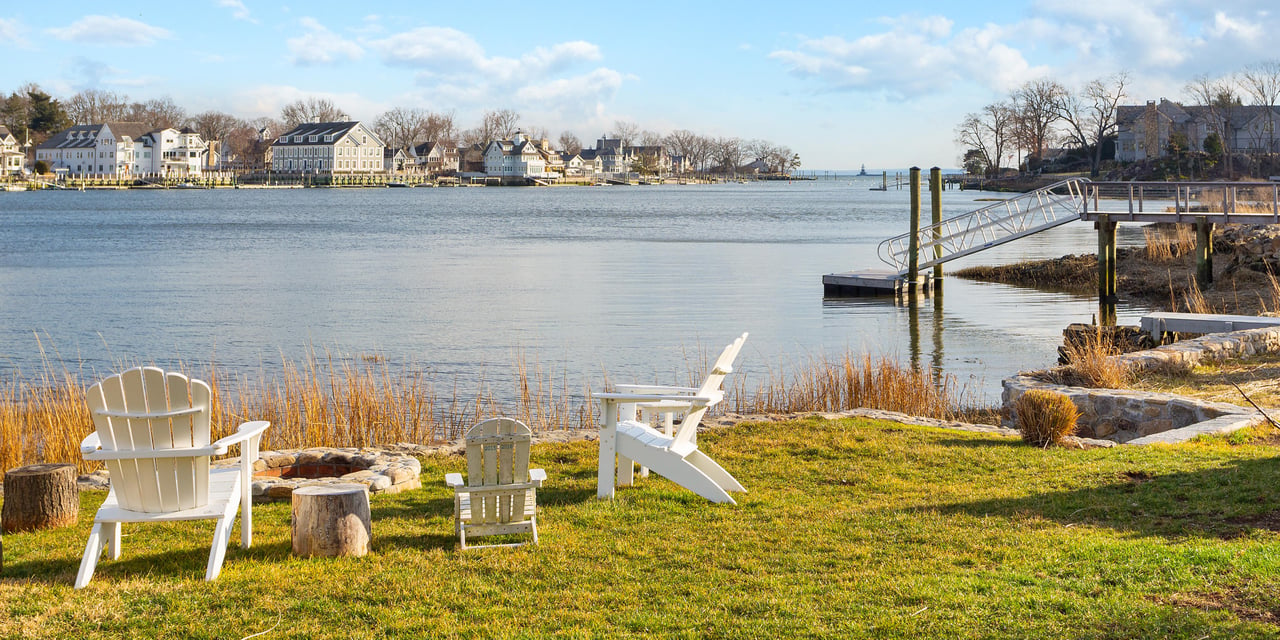
If you picture Darien through its coastal character, Tokeneke and Long Neck Point are the neighborhoods that often stand out most. Darien’s historical records note that summer homes were built in Tokeneke, Long Neck Point, and Noroton, and that Tokeneke began as a summer colony in the early 1900s.
The Tokeneke Association describes older homes here as Spanish colonial revivals, fieldstone cottages, and Tudors. Homes are clustered around a tidal cove on Long Island Sound, which gives this part of town a strong architectural and privacy-oriented identity. For buyers, this area often appeals when the goal is a classic shoreline setting with a distinctive residential feel.
Noroton Bay
Noroton Bay is one of Darien’s most distinctive residential enclaves, but it is also one of the areas where details matter most. The zoning regulations describe the district as a collection of about 77 lots in a private homeowners association, with lot sizes ranging from roughly 8,400 square feet to more than an acre.
This is also an area where all properties are in the flood hazard zone. The current minimum lot area is 25,000 square feet, with 80 feet of minimum width and 50 feet of frontage, and the regulations note that basements are not permitted within the flood hazard zones. If you are drawn to a true coastal setting here, it is especially important to review elevation, flood exposure, and how older lot patterns may differ from current zoning standards.
Beach Access and Waterfront Lifestyle
For many buyers, shoreline living in Darien is not only about owning near the water. It is also about how often you expect to use the town’s beaches and waterfront amenities.
Pear Tree Point Beach is about 8 acres at the mouth of the Goodwives River. It includes a bathing area, picnic area, gazebo, bathhouse, boat-launch ramp, kayak racks for resident rental, and the Darien Boat Club.
Weed Beach is 22 acres off Nearwater Lane and includes a bathing area, picnic areas, six tennis courts, five paddle tennis courts, a bathhouse, kayak racks, a concession stand, and the Darien Junior Sailing Team. Residents and real-estate taxpayers can buy beach emblems, and Pear Tree Point also offers a resident boat-launch permit.
That access structure is worth keeping in mind as you compare neighborhoods. Darien offers meaningful shoreline amenities, but beach use is regulated, so it helps to understand how that fits into your plans for recreation and waterfront living.
Inland Areas for Lot Size and Space
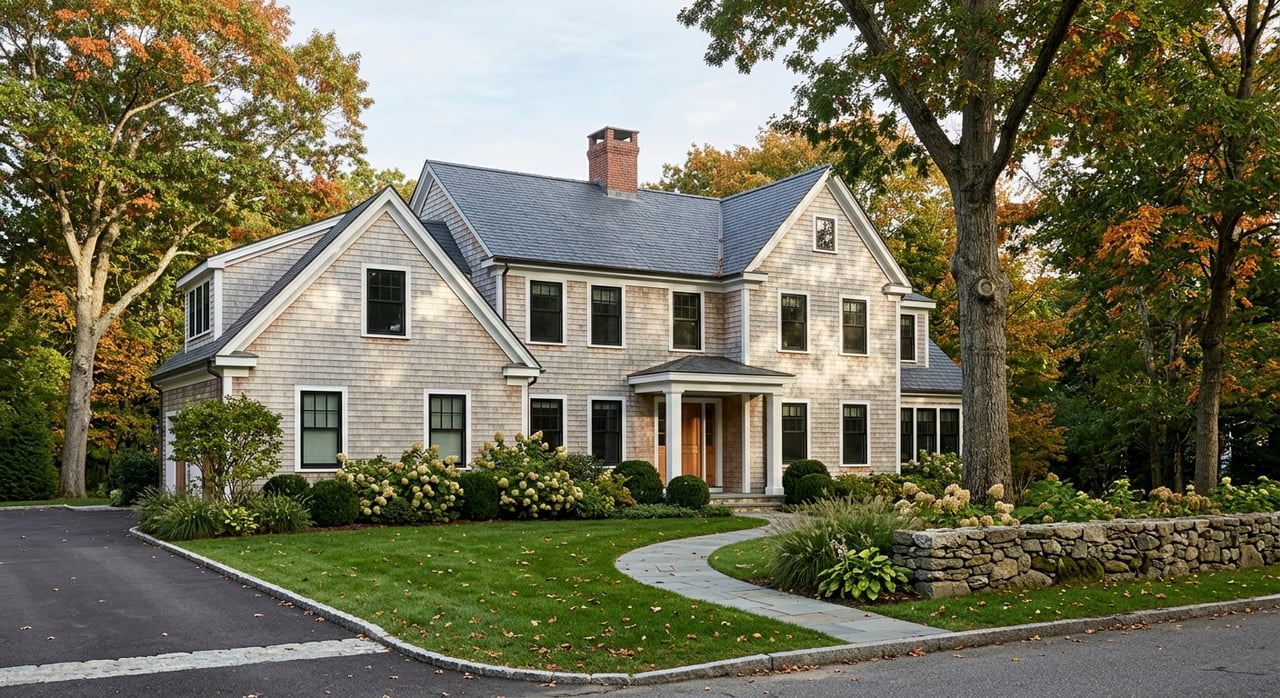
If your priority is more land, less shoreline exposure, and a traditional detached-house feel, inland Darien may be the better match. The town’s historical growth pattern includes substantial inland residential streets, and the town history notes post-Civil-War homes on Brookside, Prospect, Mansfield, Noroton, and Middlesex.
Darien’s zoning code also shows a broad range of residential lot sizes. Residential districts include R-2 at 87,120 square feet, R-1 at 43,560 square feet, R-1/2 at 21,780 square feet, R-1/3 at 14,520 square feet, and R-1/5 at 8,712 square feet. In practical terms, this means buyers can find meaningful variation in how much land and spacing a property may offer depending on its location and zoning district.
These inland areas also connect well with parks and recreation. Cherry Lawn Park spans 27.5 acres and includes tennis, pickleball, a playground, walking trails, a pond, and a nature center. Baker Park, McGuane Park, and Stony Brook Park add more neighborhood-scale options across town.
How to Choose the Right Part of Darien
The best Darien neighborhood for you usually comes down to which tradeoff feels easiest to live with. A simpler commute may mean a more town-centered environment. A stronger shoreline identity may come with flood-zone considerations. More land may mean being farther from train-oriented areas or waterfront amenities.
A few questions can help narrow your search:
- Do you want to be close to one of the two Metro-North stations?
- Would you use beach amenities regularly, or is shoreline access more of a nice bonus?
- Is lot size one of your top priorities?
- Are you comfortable evaluating flood-zone limitations in coastal areas?
- Do you prefer a pedestrian-oriented setting or a more traditional single-family street pattern?
When buyers answer those questions clearly, Darien usually starts to sort itself into logical options. That is often the fastest way to move from a broad town search to the neighborhoods that truly fit.
A Smart Buyer Strategy in Darien
In a town like Darien, the smartest search is usually not the widest one. It is the most focused one. When you know whether your priority is commute access, coastal lifestyle, or land and privacy, you can compare homes in a way that is much more useful than simply watching new listings appear.
That is where local guidance makes a difference. Small details like station convenience, park access, shoreline regulations, and zoning context can shape how a home feels in real life after closing. If you want help narrowing your search and evaluating which part of Darien fits your goals, John Bainton can help you approach the process with clarity and a practical plan.
FAQs
What is the best Darien area for commuters?
- For many buyers, the Darien Station area and Noroton Heights are the most practical choices because both are built around Darien’s two Metro-North stations.
What Darien neighborhoods feel most coastal?
- Tokeneke, Long Neck Point, and Noroton Bay have the strongest water-oriented identity, with Tokeneke and Long Neck Point standing out for shoreline setting and distinctive architecture.
What should buyers know about Noroton Bay in Darien?
- Noroton Bay is a distinctive coastal enclave, but buyers should pay close attention to flood hazard conditions, elevation considerations, and lot-pattern details because all properties are in the flood hazard zone.
Where can buyers find larger-lot homes in Darien?
- Inland residential areas are often the best places to study if you want more land, less shoreline exposure, and a more traditional detached-house setting.
Do Darien residents get beach access?
- Darien’s beach system allows residents and real-estate taxpayers to buy beach emblems, while non-residents pay daily fees, and Pear Tree Point also offers a resident boat-launch permit.
Which Darien area has the best mix of transit and retail?
- Noroton Heights is the clearest fit for buyers who want a balance of train access and nearby retail because the town frames it as a pedestrian-friendly, transit-oriented district.